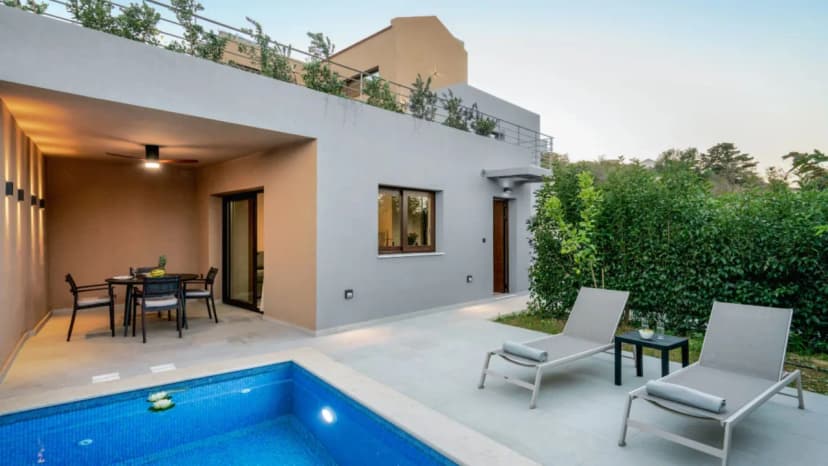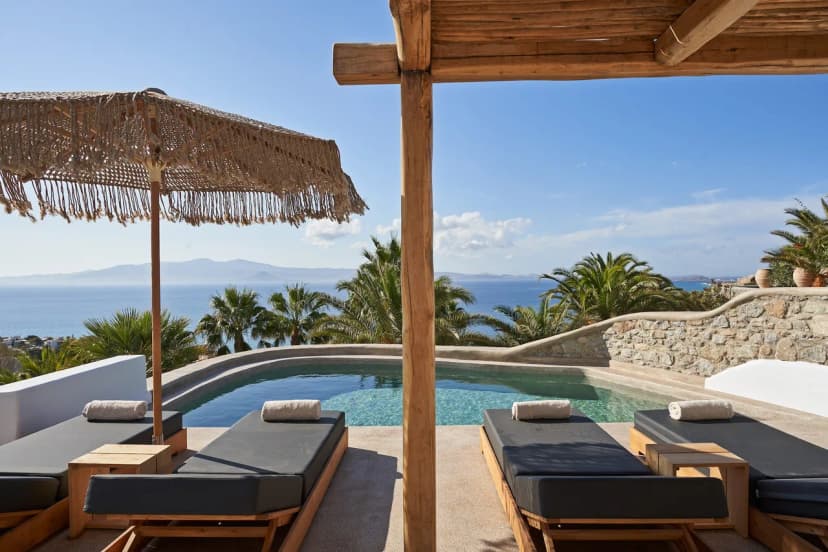
Amazing villa with sensational sea and sunset viewsN°001
Naxos, Greece
Private poolSea view
From $4,070 per night
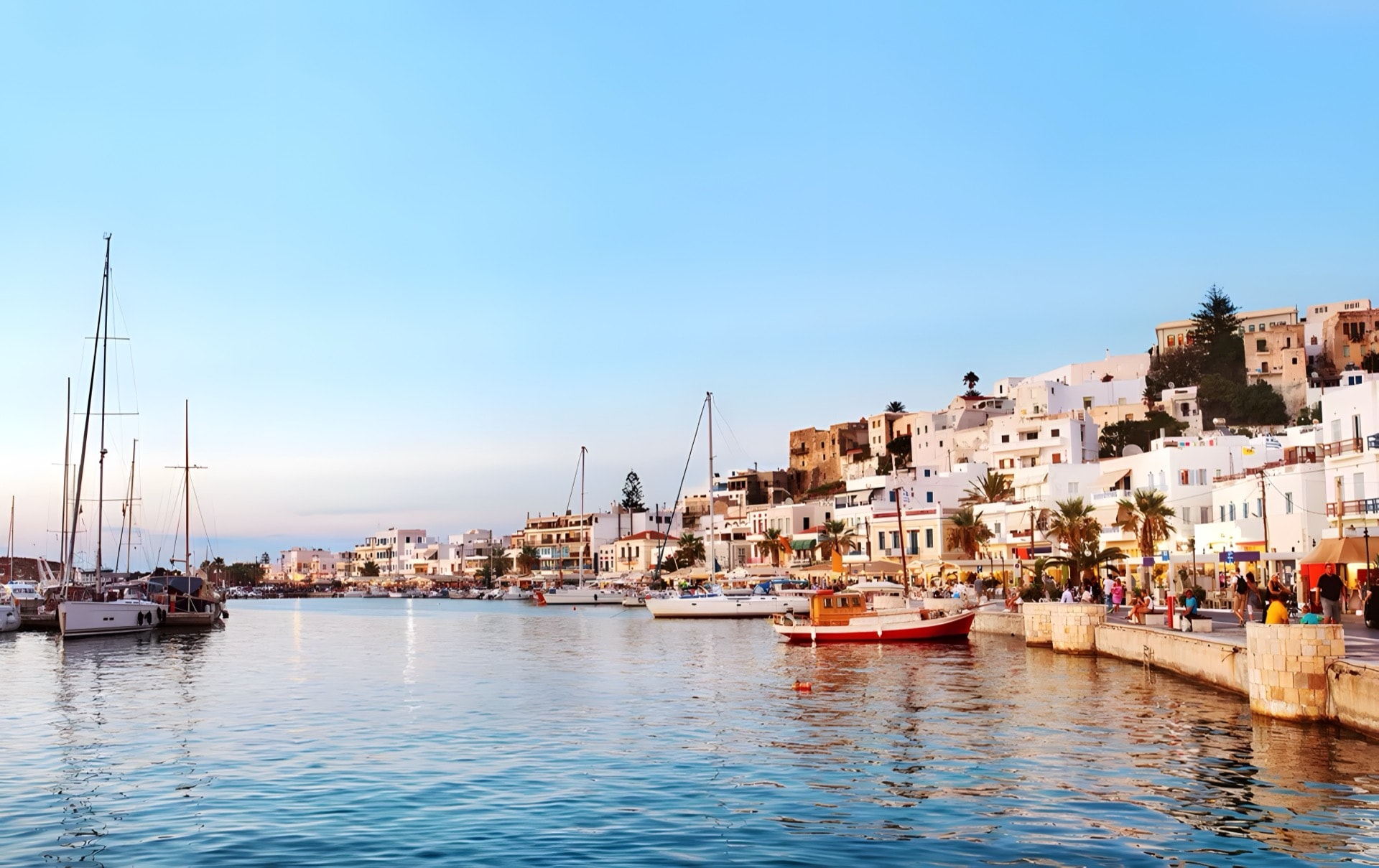
Naxos is the largest and greenest of Greece's Cycladic islands, famed for the Portara gateway above its harbour, long west-coast beaches such as Plaka, and marble villages climbing towards Mount Zas. A private villa here delivers the Aegean dream, pool, sunset and space, without the crowds of its glossier neighbours.
The most important date in the Greek calendar, marked on Naxos with candlelit processions, midnight fireworks and long family feasts, especially moving in the mountain villages of the Tragea.
A summer season of concerts, art exhibitions and performances in a seventeenth-century tower monastery in the island's interior. Culture in a magical setting, an easy evening from the coast.
The Panagia festival on 15 August is celebrated across Greece, and Filoti's panigiri beneath Mount Zas is among the biggest in the Cyclades, with live music, dancing and village-wide feasting.
Wildflowers fill the Tragea valley, walking trails and kouros quarries are at their best, and by May the beaches are warm enough for first swims without a soul on them.
Long days on Plaka's sands, kitesurfing at Mikri Vigla and village festivals through August, with the meltemi wind keeping the heat pleasant and villa pools in constant use.
September's sea is at its warmest while crowds thin and prices ease, making this the insider's season for beach days, mountain lunches and sunsets at the Portara.
Naxos stays alive year-round thanks to its farms and villages; expect quiet harbours, hearty tavernas and clear walking days, better for culture and calm than for swimming.
Naxos sits at the centre of the Cyclades, big enough to hold two islands' worth of scenery: a fertile interior of olive groves, marble quarries and Venetian towers rising to Mount Zas, the highest peak in the Cyclades, and a west coast of long, sandy, sunset-facing beaches. Naxos Town, the Chora, wraps a Venetian castle above the harbour, with the Portara standing on its islet just offshore. The prime villa country runs south of town along the west coast, through Agios Prokopios, Agia Anna and above all Plaka, where villas sit behind the dunes minutes from kilometres of golden sand. Further south, Mikri Vigla and Kastraki are quieter still, loved by kitesurfers and families alike. Inland, the villages of Halki, Filoti and Apeiranthos offer marble lanes and mountain air. Villas here favour pools, sea views and walking distance to the beach.
Begin with the beaches, among the finest in Greece: Plaka's long sands, the clear shallows of Agios Prokopios and the twin bays of Mikri Vigla, where steady meltemi winds make one side a kitesurfing arena. Climb to the Portara for sunset, then explore the Chora's castle lanes and archaeological museum. Inland days are Naxos's secret weapon: the Tragea valley's Byzantine chapels and olive groves around Halki, the marble village of Apeiranthos, and the ancient, half-carved kouros statues lying in the quarries at Melanes and Apollonas. Hikers can summit Mount Zas, mythical birthplace of Zeus, in a morning. Add boat trips to the Small Cyclades, horse riding on the beach and windsurfing lessons for the children, with the concierge arranging skippers, guides and tavernas worth the drive.
Naxos feeds itself, which in the Cyclades is a claim few islands can make. Its cattle and mountain pastures produce graviera and arseniko cheeses, its plains grow the famous Naxian potato, and its citron trees supply kitron, the island's fragrant liqueur, distilled in Halki since the nineteenth century. Tavernas across the island serve slow-cooked goat, fresh fish at the beach and courgette flowers in the mountain villages, with standards high and prices honest. The Chora adds smarter waterfront dining and wine bars pouring Assyrtiko from across the Aegean. Stock the villa from bakeries and farm shops, then let a private chef assemble a Naxian feast, cheeses, island lamb, garden vegetables, for a long evening by the pool.
The season runs from late April to October. May and June bring warm days, green hillsides and quiet beaches, with the sea warming quickly; June is ideal for families ahead of the Greek school holidays. July and August are hot, lively and breezy, when the meltemi wind keeps temperatures pleasant and kitesurfers happy, and villas book furthest ahead. September may be the connoisseur's month: the sea at its warmest, the light golden and the crowds gone, with village festivals rolling on. October stays gentle for walkers and sightseers. Winter is quiet and local, with many beach tavernas closed, better for a cultural pause than a swim.
Naxos has its own small airport (JNX), served by short domestic flights from Athens (ATH), a hop of about forty minutes. Ferries are the other classic route: fast boats from Piraeus reach the island in around four hours, with regular connections from Mykonos, Santorini and Paros making Naxos an easy stop on a Cycladic itinerary. In high summer both flights and ferry cabins sell out early, so book ahead. On the island, a hire car is recommended for mountain villages and beach-hopping, though west-coast villas put the sand within walking distance. The concierge can arrange transfers, car hire and ferry tickets end to end.