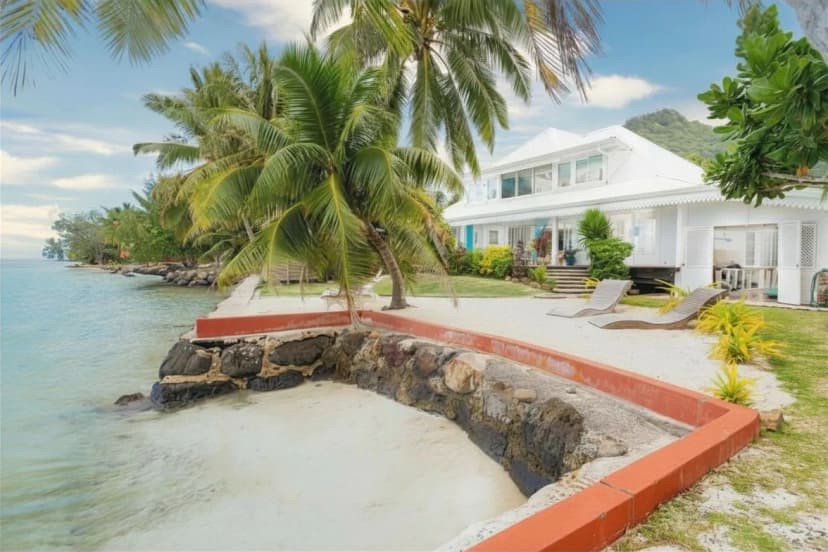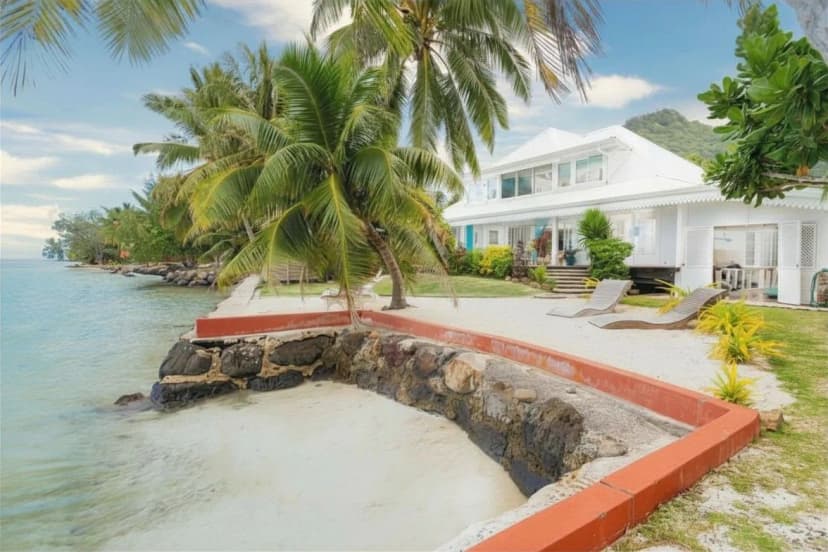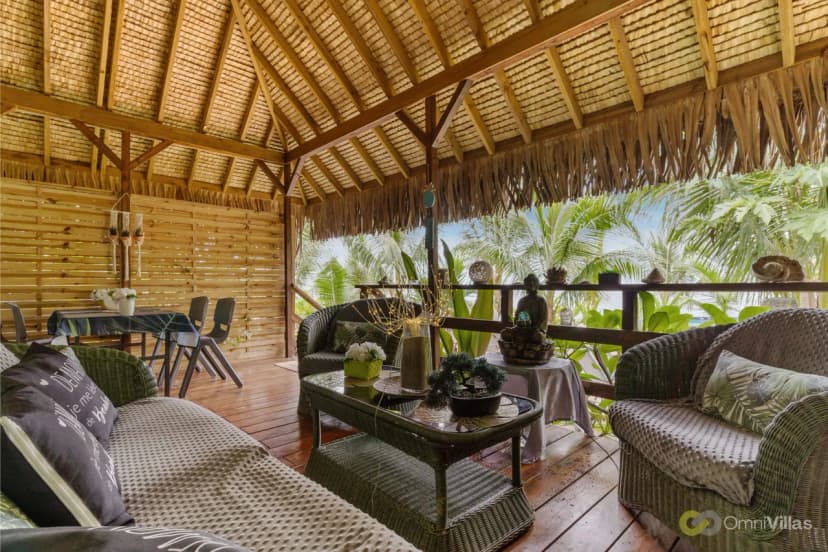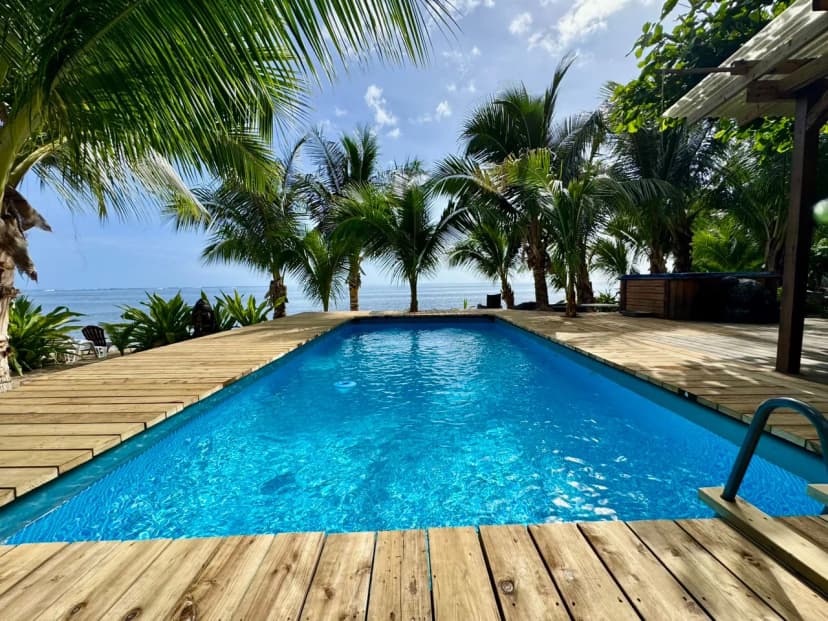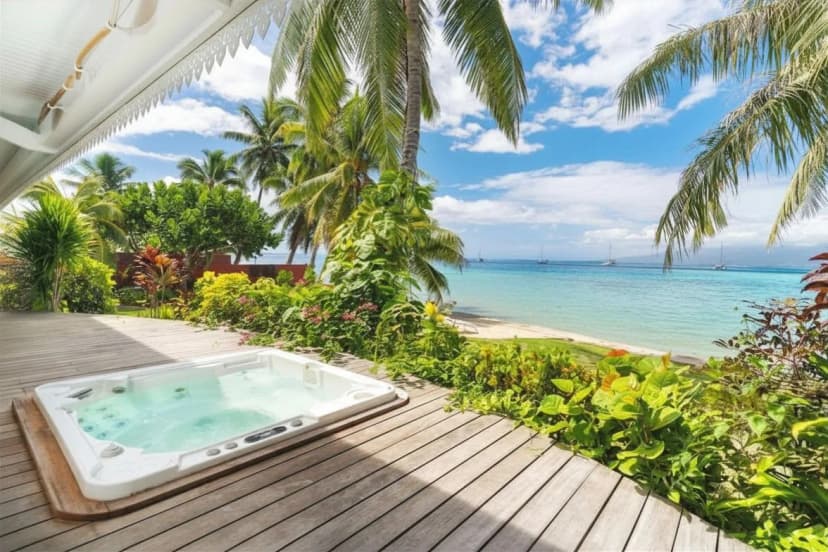
Beachfront Six Bedroom Villa in MooreaN°001
Windward Islands, French Polynesia
Sea viewWaterfront
From $1,455 per night
 Photo by Tom Donders on Unsplash
French Polynesia scatters 118 islands across the South Pacific, from Tahiti's mountainous coasts to the impossibly clear lagoons of Moorea and Bora Bora. A private villa here trades the resort bungalow for space and seclusion: your own pool, garden and stretch of lagoon view, with concierge support across the islands.
Polynesia's great cultural festival fills Papeete with weeks of spectacular dance and drumming competitions, outrigger canoe races and traditional sports. Island communities rehearse all year for it.
The world's best surfers take on the fearsome reef-break barrels of Teahupo'o on Tahiti's south coast in a stop on the World Surf League Championship Tour, watched from a flotilla of boats in the channel.
Humpbacks migrate from Antarctica to calve in Polynesian waters, and licensed boats from Tahiti and Moorea offer some of the world's most reliable whale encounters.
The most prestigious outrigger canoe race in the Pacific, paddled over three days between Huahine, Raiatea, Taha'a and Bora Bora, with festive crowds lining the finishing beaches.
The most comfortable months, with fresh breezes, low humidity and superb visibility for snorkelling and diving, building towards July's Heiva festivities.
Peak humpback season pairs with settled weather; mornings on the water regularly deliver whales, rays and reef sharks in a single outing.
Showers turn the peaks lush while beaches empty out; the Hawaiki Nui canoe race in November is a stirring send-off to the dry months.
The hottest, most tropical stretch, with brief downpours, mango season abundance and the year's calmest pricing for lagoon-front villas.
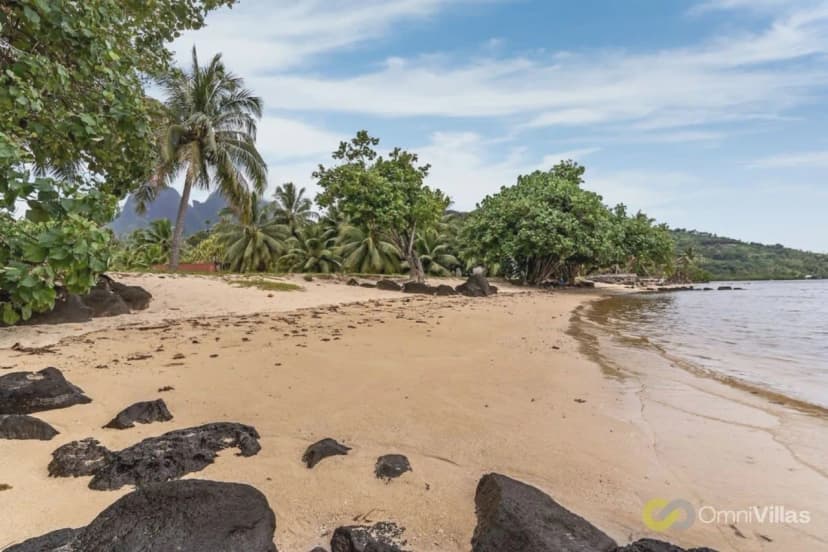
Most stays centre on the Society Islands. Tahiti, the largest island and international gateway, keeps its best residential coast on the west side around Punaauia and Paea, where villas look across the channel to Moorea and sunsets arrive on schedule. Moorea itself, thirty minutes by ferry, is the villa island par excellence: Temae in the north-east holds the island's finest white-sand beach beside the golf course, Teavaro faces the sunrise across the lagoon, and Haapiti on the west coast pairs a broad lagoon with a laid-back village and surf break. Beyond these two, inter-island flights open up Bora Bora, Huahine and the atolls of the Tuamotus. Villas here mean garden compounds and lagoon-front homes with private pools, staff options and genuine seclusion, a different rhythm from the resort islands, with our concierge coordinating boats, chefs and transfers.
The lagoon is the playground. Snorkel coral gardens off Moorea, drift among blacktip reef sharks and stingrays on a guided lagoon tour, or dive passes alive with pelagics. Between July and November humpback whales calve in Polynesian waters, and licensed operators run respectful encounters that rank among the world's best. On land, 4x4 tours climb Moorea's Belvedere lookout between the twin bays of Cook and Opunohu, hiking trails thread pineapple fields and volcanic ridges, and Tahiti's interior hides waterfalls and the Papenoo valley. Surfers make the pilgrimage to Teahupo'o on Tahiti's south coast, one of the heaviest waves on earth, while gentler breaks suit learners at Haapiti. Add outrigger canoeing, lagoon fishing, pearl-farm visits and Polynesian dance and drumming. Your concierge arranges private boat charters, guides and whale-watching permits.
Polynesian tables are built on the lagoon and the land: poisson cru, raw tuna marinated in lime and coconut milk, is the national dish and tastes best metres from the water. Roadside snacks and food trucks, the famous roulottes of Papeete's waterfront, serve grilled fish, chow mein and crêpes at friendly prices, while French influence shows in proper baguettes, patisserie and well-stocked cellars. Markets overflow with mangoes, papaya, vanilla from Taha'a and fresh-caught mahi-mahi. Traditional ahima'a feasts, cooked in an earth oven, appear at cultural evenings. In a villa, a private chef or daily cook is the most relaxed way to eat well, and the concierge can provision the kitchen before you land.
French Polynesia is warm year-round, split into two seasons. The dry season, May to October, brings cooler trade winds, lower humidity and the clearest lagoon conditions, and is the most comfortable time for a villa stay. It also overlaps the humpback whale season, July to November, and the Heiva festivals of July. The wet season, November to April, is hotter and more humid with short, heavy showers, though mornings are often bright and the islands are green and quiet; it suits travellers chasing value and solitude. Sea temperatures stay swimmable in every month. Book early for July, August and the Christmas holidays.
All international routes arrive at Faa'a International Airport (PPT) on Tahiti, with direct flights from Paris, Los Angeles, San Francisco, Auckland and Tokyo among others. Moorea is the easiest onward hop: around thirty minutes by frequent catamaran ferry from Papeete, or ten minutes by air. Air Tahiti's inter-island network connects Bora Bora, Huahine, Raiatea and the atolls in under an hour. On Tahiti and Moorea a hire car is useful for exploring the coast roads, while boats do the rest. The concierge arranges private transfers, ferry tickets and inter-island connections door to door.