Luxury Island Stay Surrounded By NatureN°001
Zadar Region, Croatia
Sea viewSpa
From $26,919 per night
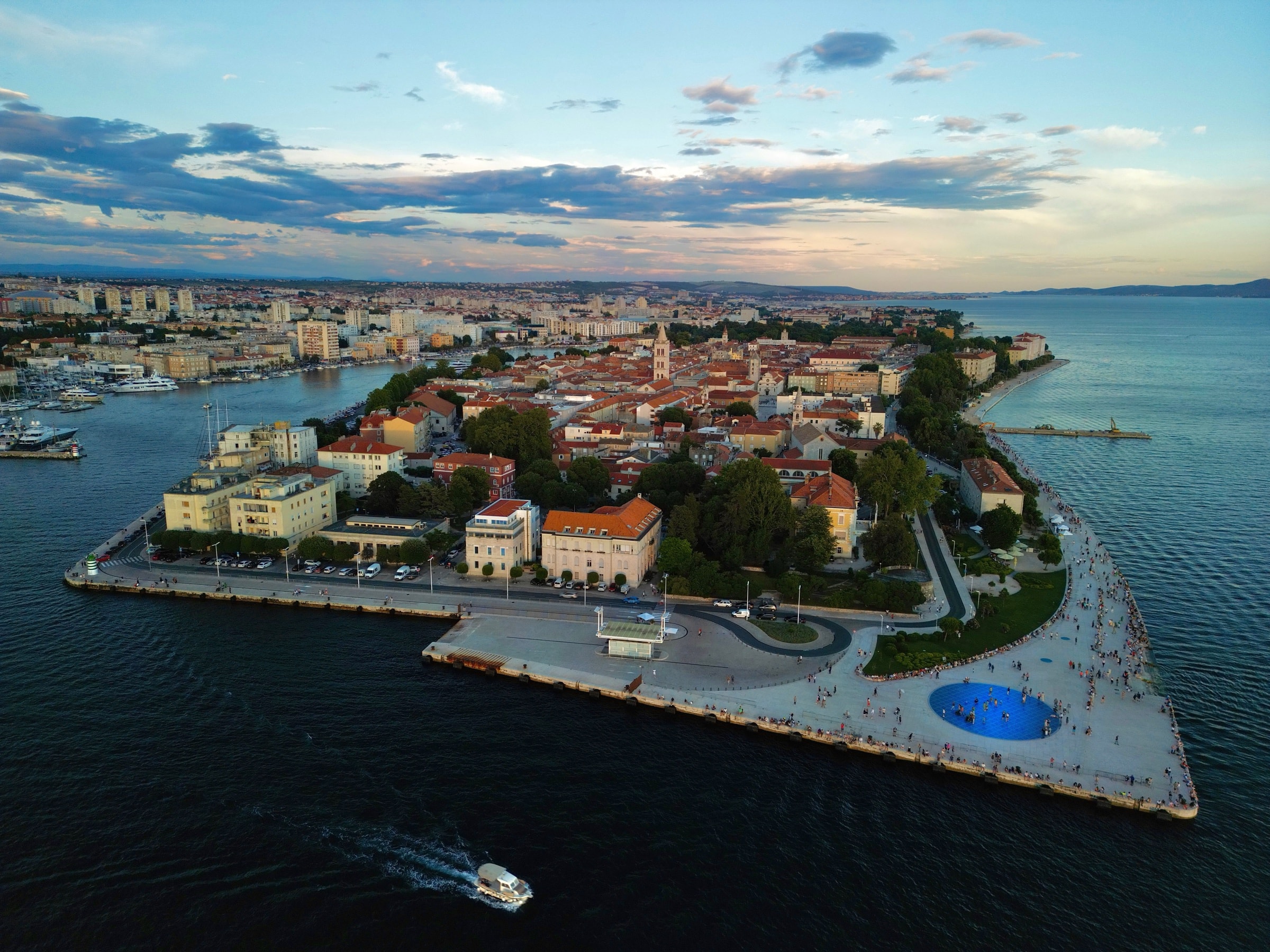 Photo by DeLuca G
The Zadar region occupies the heart of Croatia's Dalmatian coast, where a Roman-founded city faces a scatter of islands and the Velebit mountains rise close behind. Villas along the riviera from Petrčane to Biograd na Moru and under the cliffs at Starigrad give you a private pool by the Adriatic with national parks, marinas and old-town evenings all within easy reach.
Running since 1961, this festival stages classical and early-music concerts in the extraordinary acoustics of Zadar's ninth-century rotunda church and other historic venues.
Zadar's quays turn off the lights and fill with candle-lit stalls, wooden boats selling island produce and traditional food under the full moon, one of Dalmatia's most atmospheric nights.
A contemporary arts festival that animates the old town's squares and courtyards with theatre, installations and street performance on late-summer evenings.
Biograd na Moru hosts one of Europe's largest in-water boat shows, filling the marina with yachts and closing the Adriatic sailing season in style.
Paklenica, Plitvice and Krka are at their lushest and quietest, and by late May the Adriatic is warm enough for the first long swims.
The warmest sea, Kornati boat trips and Zadar's festival calendar, from St Donatus concerts to the candle-lit Full Moon night on the quay.
September keeps summer's sea without the crowds, olives and grapes come in across the hinterland, and October's Biograd Boat Show gathers the sailing world.
Mild, tranquil months when Zadar's marble lanes belong to locals, konobas cook slow winter dishes and the famous sunsets play to almost no one.
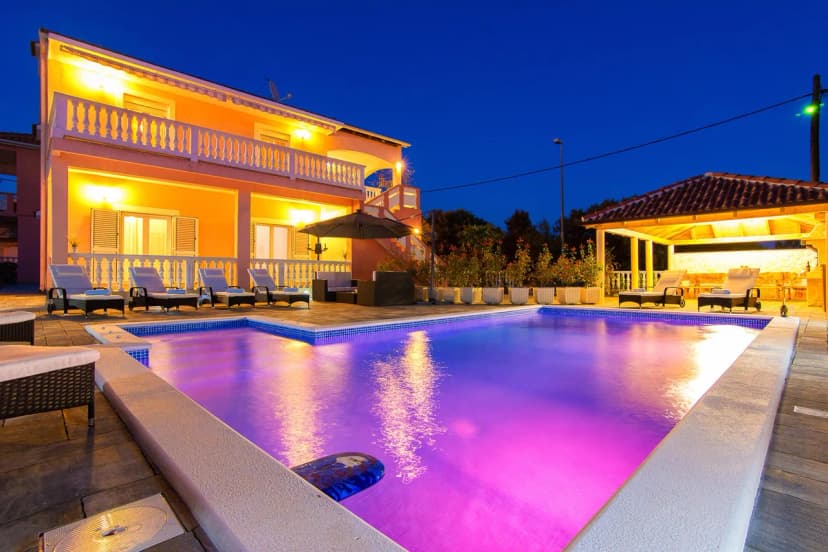
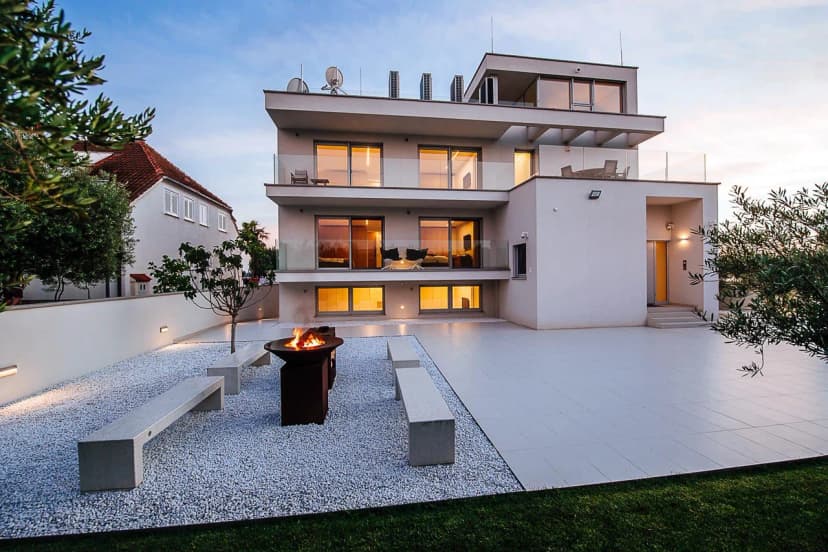
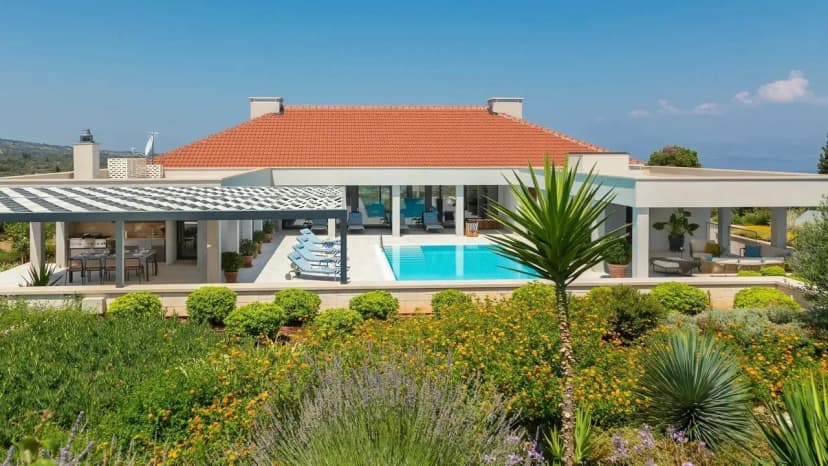
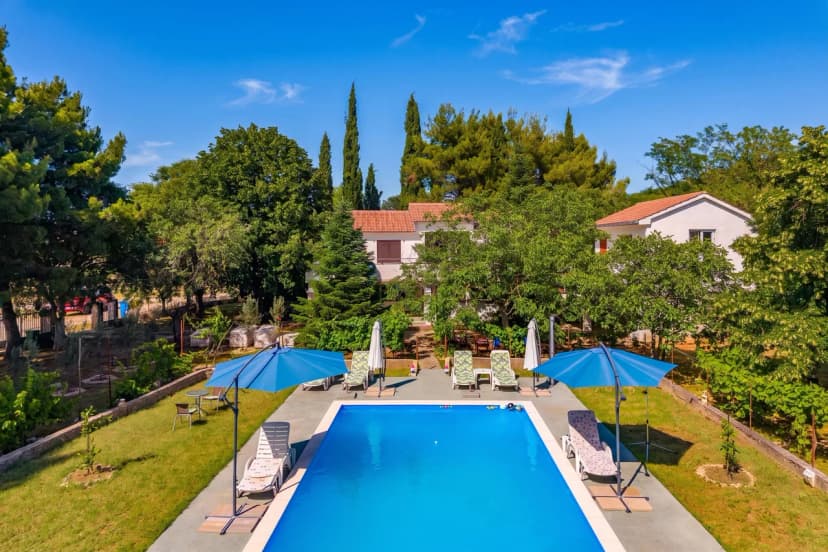
Zadar anchors the region: a peninsula old town of Roman ruins, Romanesque churches and marble lanes, with the Sea Organ sounding on its western quay. The villa coast unrolls on either side. Northwest of the city, Petrčane and the pine-backed coves towards Nin suit families after calm water and sunset views. Southeast, Bibinje and Sukošan share one of the Adriatic's largest marinas, a natural base for sailing parties, before the riviera reaches Biograd na Moru, a lively small town facing the Pašman channel and its islands. North along the coast, Starigrad sits dramatically between the sea and the cliffs of Paklenica National Park. Offshore, Ugljan, Pašman and Dugi Otok reward lazy island days. Villas here favour private pools, olive-shaded gardens and walkable access to pebble coves.
Begin on Zadar's quay at dusk, where the wave-driven pipes of the Sea Organ and the glowing Greeting to the Sun accompany a sunset Alfred Hitchcock once declared the world's most beautiful. By day, wander the Roman forum and the ninth-century rotunda of St Donatus, then take to the water: boat trips thread the bare, sculptural islands of Kornati National Park and the sheer bay of Telašćica on Dugi Otok, while the marina at Sukošan launches week-long sails. Hikers and climbers head for Paklenica's canyons beneath Velebit, and the Plitvice Lakes and Krka waterfalls are both feasible day trips. Add the sandy lagoons of Nin, cycling on Pašman and beach days at Sakarun, with the concierge arranging skippers, park tickets and guides.
Dalmatian cooking here is disarmingly simple and superb: fish grilled over vine cuttings, octopus baked under the peka bell, black cuttlefish risotto and shellfish from local farms, finished with olive oil pressed along this same coast. Konobas, the family-run taverns, serve it best, from Zadar's old town to harbour terraces in Biograd and Starigrad. Look for sheep's cheese from nearby Pag, prosciutto from the Ravni Kotari hinterland and, above all, maraschino, the cherry liqueur Zadar has distilled from Maraska cherries since the eighteenth century. Local Pošip and Plavina wines suit long seaside lunches. For villa evenings, the concierge can arrange a private cook or deliver the morning's catch and market vegetables to your kitchen.
May, June and September are the connoisseur's months: the Adriatic is warm enough to swim, the parks are green and uncrowded, and restaurant terraces breathe easily. July and August bring full Mediterranean summer, with the warmest sea, festival nights in Zadar and the coast at its liveliest; villas with private pools are the antidote to busy beaches. October often stays mild and golden, good for Paklenica hiking and Kornati boat days, and the Biograd Boat Show closes the sailing season. Winters are quiet and mild by continental standards, when the old town returns to its own rhythms; the famous sunsets, happily, perform year-round.
Zadar Airport (ZAD) lies about fifteen minutes from the old town and within forty minutes of most villas on the riviera, served by an extensive network of seasonal European routes and year-round links via Zagreb. Split Airport (SPU) is roughly an hour and a half to the south, useful for winter arrivals or combined Dalmatian itineraries. The A1 motorway makes self-driving from Zagreb around two and a half hours, and a car is worthwhile for national-park days. Ferries and catamarans from Zadar's port reach Ugljan, Dugi Otok and the wider islands, and the concierge arranges private transfers, boat charters and marina berths.