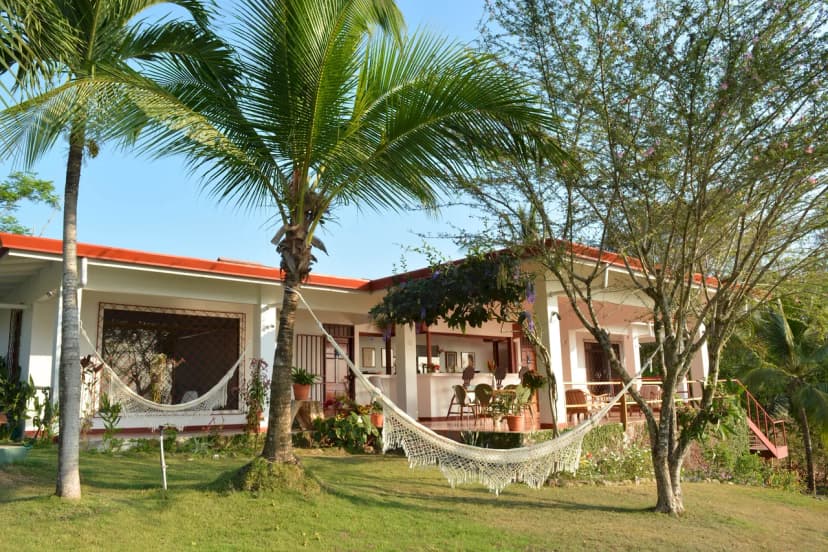
Ocean View Three Bedroom Guest House in Manuel AntonioN°001
Manuel Antonio & Pacific Coast, Costa Rica
 Photo by Jean Paul Montanaro
Manuel Antonio is Costa Rica's most celebrated stretch of coast, where a wildlife-filled national park meets white-sand coves on the central Pacific, with the surf towns of the Nicoya Peninsula further north. A private villa here puts sloths and monkeys in the garden, an infinity pool above the ocean and a concierge to arrange every adventure.
A renowned gathering of music, art and wellness held in the jungle near Uvita, further down the Pacific coast. Worth planning around for travellers who like their rainforest with a festival spirit.
Puntarenas honours the Virgin of the Sea with a colourful procession of decorated fishing boats across the gulf, plus music and celebrations along the port town's promenade.
Timed to the peak of humpback season at Marino Ballena National Park south of Manuel Antonio, with guided boat trips to see mothers and calves close to shore.
Marina Pez Vela hosts major international billfish tournaments through the dry season, when sailfish and marlin fishing off Quepos is among the best anywhere. Charter early if you want to fish these weeks.
Cloudless days for beaches, boat trips and park walks, with wildlife easiest to spot and the sportfishing at its peak. The most popular months, so book villas well ahead.
The rains return the forest to vivid green while mornings stay reliably sunny. Quieter trails and beaches, and excellent value for longer villa stays.
Southern-hemisphere humpback whales calve along this shoreline, making boat days from Quepos and Uvita unforgettable. Expect dramatic skies and the greenest landscapes of the year.
Rains taper, waterfalls run full and the coast polishes itself for December, a rewarding shoulder month with uncrowded beaches and a fresh-washed rainforest.
Manuel Antonio occupies a forested ridge between the working port town of Quepos and the national park that made the area famous, on Costa Rica's central Pacific coast. Villas here climb the hillside through the canopy, so the classic experience is an infinity pool facing the ocean with monkeys, sloths and toucans passing through the garden. Everything is close: park gates, beaches and restaurants are minutes away, and the marina at Quepos handles boat days. Northwards across the Gulf of Nicoya, reached via Puntarenas or by road around the gulf, the Nicoya Peninsula around Cóbano offers a different rhythm, with the surf and wellness towns of Santa Teresa and Montezuma and long, wilder beaches. Both areas suit villa stays well; Manuel Antonio is the easier base for families and first visits, Nicoya for surf-led and barefoot-luxury trips.
Manuel Antonio National Park is the essential outing: an early-morning guided walk finds two- and three-toed sloths, capuchin monkeys and toucans, ending on Playa Manuel Antonio, one of the country's prettiest beaches. From Marina Pez Vela in Quepos, charter for sailfish and marlin, take a sunset catamaran or head out in whale season, roughly August to October, when humpbacks calve along this coast. Adventures stack up quickly: ziplining and waterfall rappelling in the hills, mangrove kayaking at Damas, white-water rafting on the Savegre and the crocodile-lined mangroves of the Tárcoles further north. On the Nicoya side, surf lessons at Santa Teresa, the Montezuma waterfalls and horseback rides along the sand fill the days. Your concierge arranges naturalist guides, boats and private transport throughout.
Costa Rican cooking is fresh and unfussy: gallo pinto at breakfast, casados of rice, beans, plantain and grilled fish at lunch, and ceviche whenever the catch lands. Around Manuel Antonio and Quepos the dining scene has grown well beyond its size, with hillside restaurants serving just-caught tuna, mahi-mahi and sunset views, and the marina adding polished waterfront tables. Markets in Quepos supply tropical fruit that redefines the word, and the farmers' market is a Saturday ritual. On the Nicoya side, Santa Teresa mixes beach shacks with a surprisingly international restaurant row. The most popular arrangement remains a private chef at the villa, turning market fish and fruit into long poolside dinners while the forest sounds take over.
The central Pacific has two seasons rather than four. The dry season, roughly December to April, brings day after day of sunshine, the easiest wildlife spotting and the busiest weeks, especially around Christmas and Easter. The green season, May to November, is lusher and quieter, with bright mornings, afternoon showers and better value; it is many regulars' favourite. August to October adds the spectacle of humpback whales along the coast, while September and October are the wettest months, better suited to travellers relaxed about downpours. Temperatures stay warm year-round. Whenever you come, a villa with a covered terrace and pool makes both sunshine and rainforest rain part of the pleasure.
Most travellers fly into San José's Juan Santamaría International (SJO), then continue to Manuel Antonio by private transfer, about two and a half to three hours on a good coastal highway, or by a short domestic flight to Quepos La Managua (XQP), around twenty-five minutes in the air. For the Nicoya Peninsula, domestic flights and road-and-ferry routes via Puntarenas serve Cóbano, Santa Teresa and Montezuma. A four-wheel-drive is useful on the peninsula's rougher roads, while Manuel Antonio itself needs no car if transfers are arranged. The concierge coordinates flights, drivers and boat connections so arrival is seamless.