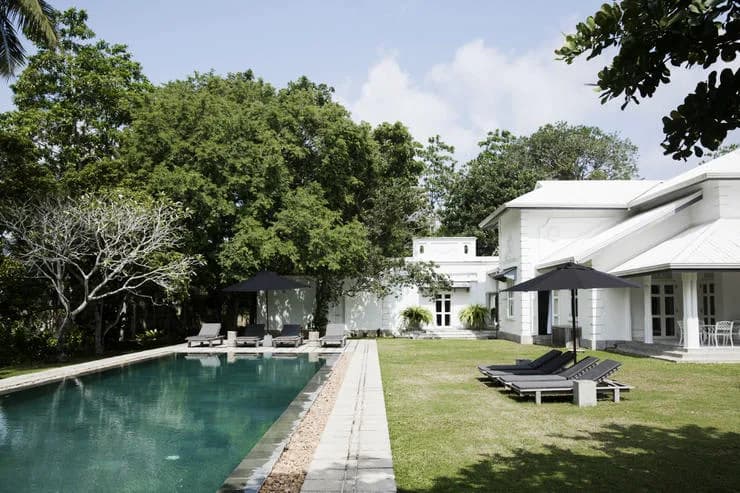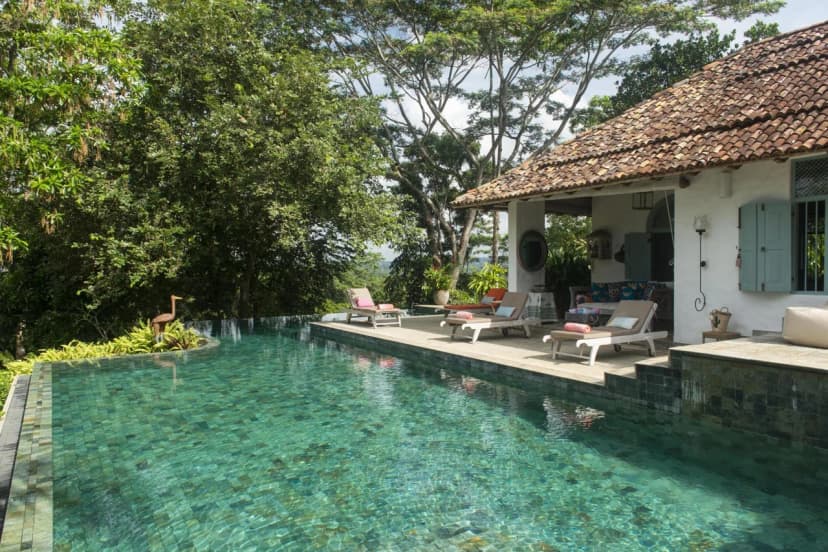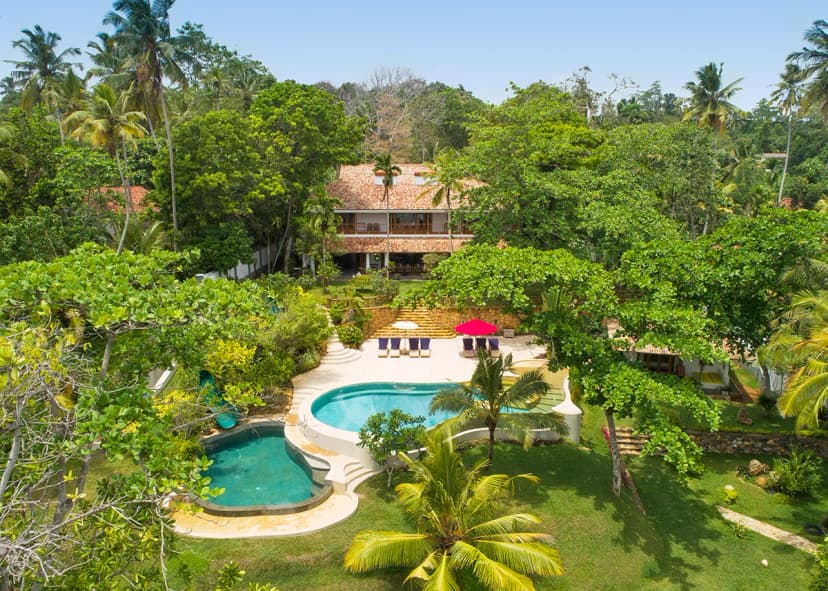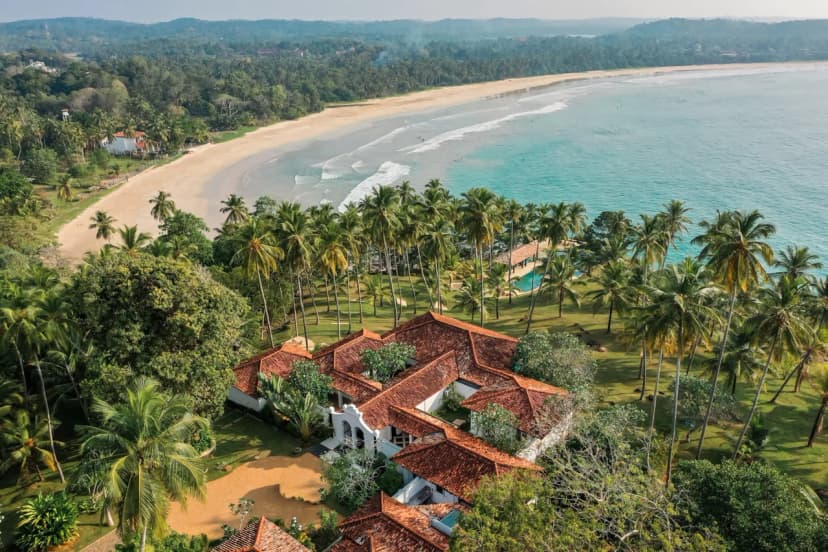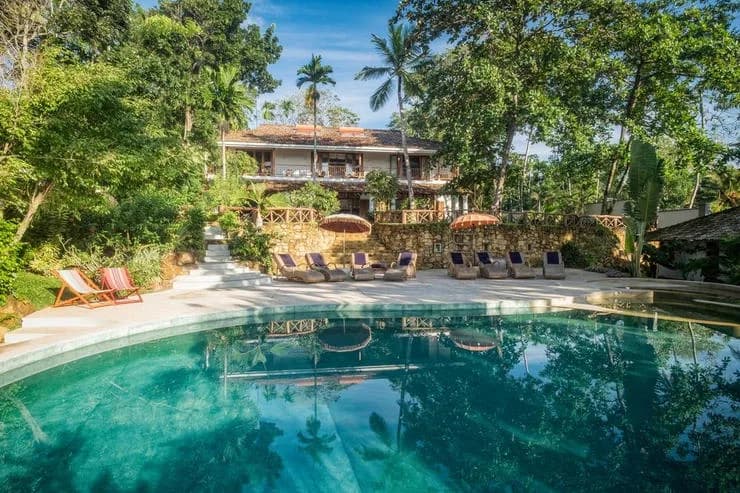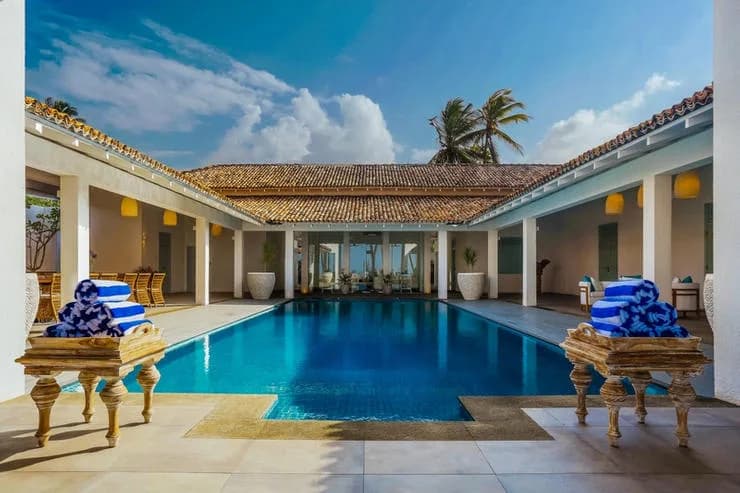
Amazing New Villa On The BeachN°001
Galle, Sri Lanka
Private pool
From $10,465 per night
 Photo by Matthijs Idema on Unsplash
Galle anchors Sri Lanka's south coast, its seventeenth-century Dutch fort, a UNESCO World Heritage Site, presiding over a shoreline of palm-backed bays that runs east through Talpe and on towards Dikwella. This is the island's most polished villa country: walled tropical gardens, private pools and staff, with surf, whales and tea estates close at hand.
One of Asia's most admired literary gatherings brings international authors, talks and dinners into the streets and mansions of Galle Fort; villa bases nearby book out early.
The island-wide Avurudu festivities mark the traditional new year with family feasts, sweetmeats, games and firecrackers, a warm, generous moment to experience Sri Lankan home life.
Buddhism's most important festival lights temples and streets across Sri Lanka with lanterns and illuminations, celebrated with quiet beauty in the towns around Galle.
The coast at its finest: settled sunshine, gentle swimming bays and dawn whale-watching sailings from Mirissa, when blue and sperm whales pass closest to shore.
The Sinhala and Tamil New Year fills homes with feasting in April, followed by Vesak's lantern-lit temples in May, as the first monsoon showers green the gardens.
Brief tropical downpours alternate with sunshine, paddy fields glow green and villas offer their best value; sheltered coves like Hiriketiya keep swimming and surf alive.
Quiet beaches, dramatic skies and warm seas between weather systems, ideal for fort wanderings, spa days and having the coast largely to yourself.
Galle is the hub of Sri Lanka's south-western corner. The fort itself, built by the Dutch in the seventeenth century on Portuguese foundations, is a living town of ramparts, mansions and courtyard cafés, and a few historic houses within the walls take guests. Most luxury villas, though, line the coast road east of the city: Unawatuna's famous swimming bay comes first, then Thalpe and Koggala, where walled beachfront estates hide behind palms, and on through the surf villages of Ahangama and Weligama to Mirissa and, further east, Dikwella with the horseshoe cove of Hiriketiya. Inland lie cinnamon plantations, paddy fields and low tea estates. Choose fort-adjacent addresses for walkable culture and dining, the Thalpe–Koggala strip for classic beachfront villa privacy, and the Dikwella area for a younger, surf-led rhythm.
Begin on the fort ramparts at golden hour, when cricket games and kite flyers share the grass beneath the lighthouse, then lose a morning in the lanes among gem merchants, galleries and boutiques. The sea sets the wider agenda: swim in the sheltered bays at Unawatuna and Hiriketiya, learn to surf on Weligama's forgiving beach break, snorkel off Jungle Beach, and between December and March head out from Mirissa at dawn to watch blue whales, the largest animals on earth, feeding offshore. Photograph the stilt fishermen perched above the waves near Koggala, take a boat safari across Koggala Lake to cinnamon islands, and visit a working tea estate in the low-country hills, including one known for rare virgin white tea near Ahangama. Yala's leopards and Udawalawe's elephants are feasible as long day trips, and villa staff or the concierge will arrange drivers, boats and guides.
Sri Lankan cooking is one of the great underrated cuisines, and villa chefs here are its best ambassadors: rice and curry spreads of jackfruit, dhal, coconut sambol and just-caught fish, hoppers with treacle at breakfast, and crab or prawn curries rich with local spice. The south coast supplies superb seafood, from lagoon prawns to tuna landed at Mirissa, while cinnamon, the region's historic export, still scents the gardens between Galle and Koggala. Galle Fort has developed a cosmopolitan café and restaurant scene, good for long lunches between gallery visits, and beach restaurants along Thalpe and Unawatuna grill fish metres from the water. Most villas come staffed, so the finest meals of the trip are often eaten barefoot at home.
The south-west coast keeps tropical warmth year-round, with the dry season from roughly December to April delivering the calmest seas, the most reliable sunshine and the whale-watching peak; Christmas and New Year book earliest. April brings the Sinhala and Tamil New Year, a festive time to be in a Sri Lankan home. The south-west monsoon influences the coast from around May to September, when brief, heavy showers alternate with sunshine, the landscape turns intensely green and villa rates soften; seas can be rough for swimming, though sheltered bays such as Hiriketiya still work. October and November are inter-monsoon months, warm with passing storms, easing back towards the December high season.
International flights arrive at Bandaranaike International Airport (CMB), north of Colombo, from where the Southern Expressway makes Galle roughly a two-hour drive; villas further east towards Dikwella add up to an hour. Almost all guests pre-arrange a private car and driver, which the concierge organises, and having a driver on call remains the easiest way to explore once settled. The coastal railway from Colombo to Galle is one of the world's more scenic budget journeys and worth riding once for its ocean-side stretch. Within the villa areas, tuk-tuks handle short hops to beaches, the fort and restaurants.