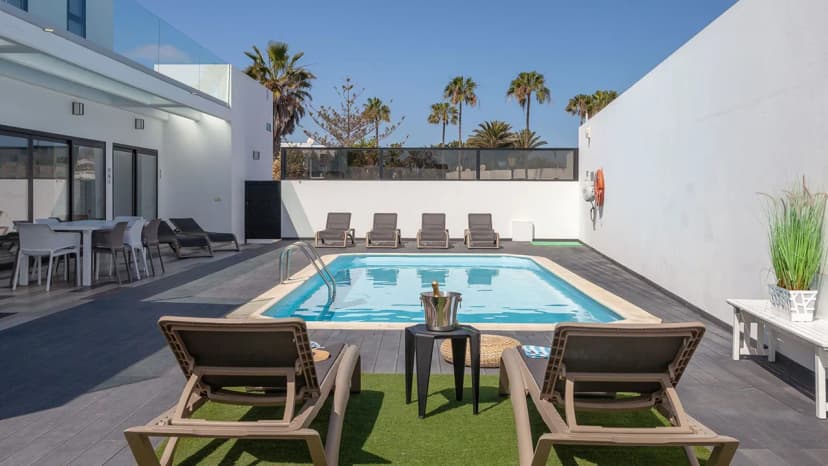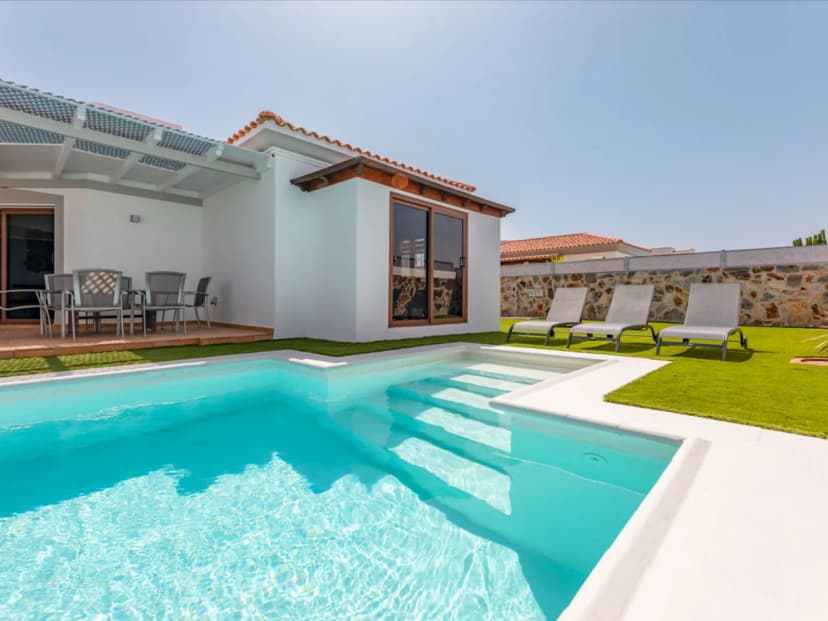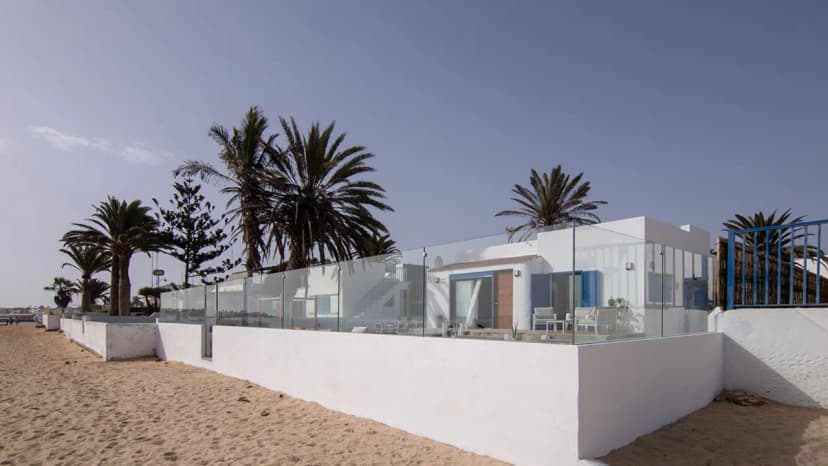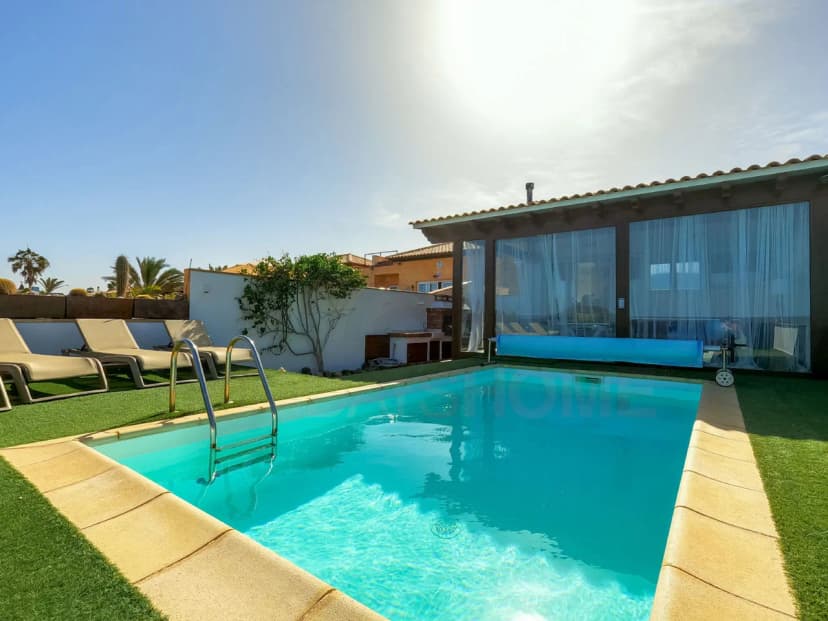
Beachfront Serenity with Private Pool in CorralejoN°001
Fuerteventura, Spain
Private poolSea view
From $1,099 per night
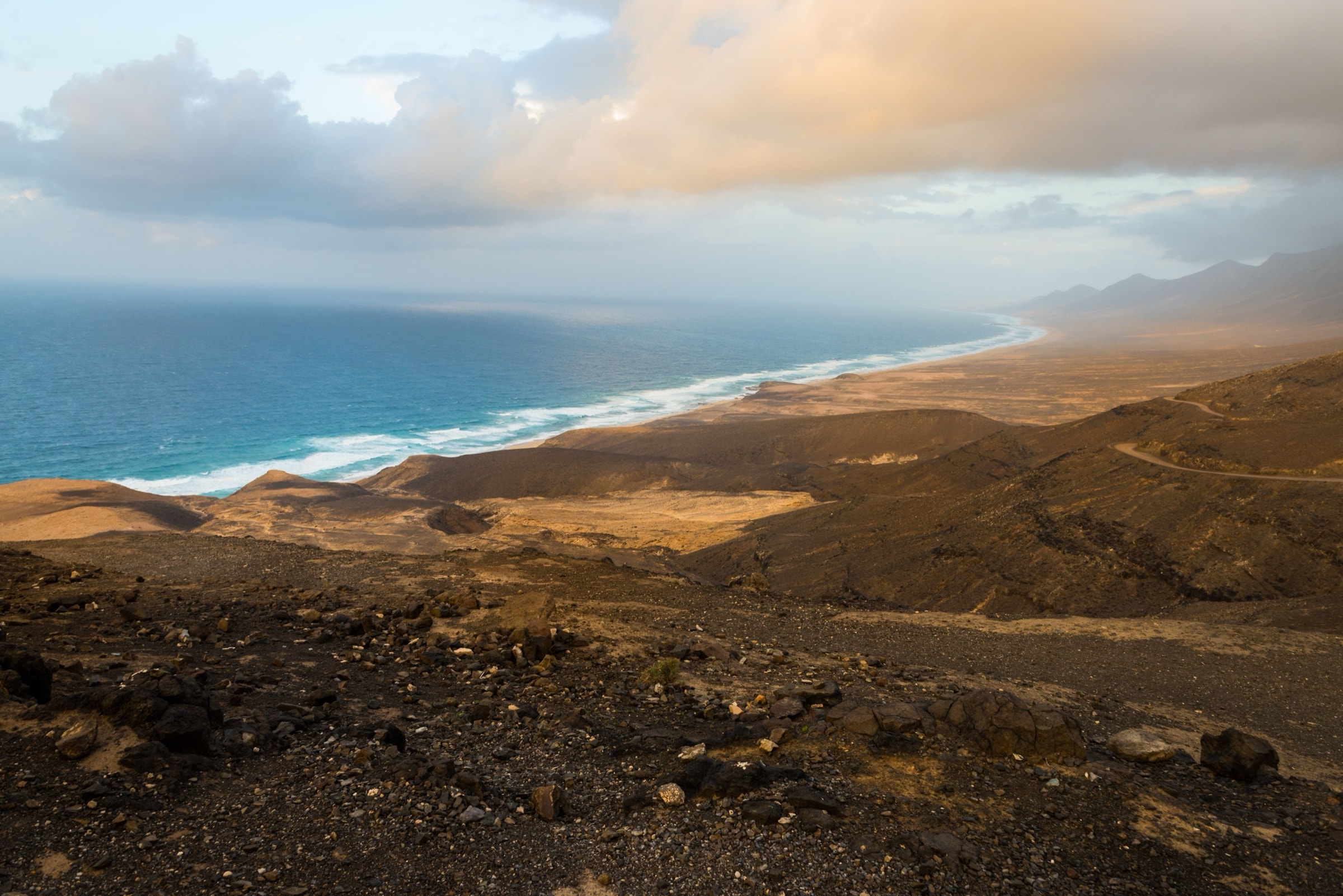 Photo by Magic K
Fuerteventura is the Canary Islands' beach island: mile after mile of white sand, turquoise shallows and rolling dunes under one of Europe's most reliable climates. A private pool villa around Corralejo in the north puts the dunes, the surf and the ferry to Isla de Lobos on your doorstep, with sunshine a near-certainty in any month.
Puerto del Rosario and Corralejo stage weeks of parades, costumes and street music in the Canary carnival tradition, the island's most exuberant season.
The island's fishing communities, Corralejo among them, honour the patroness of seafarers with seaborne processions of decorated boats and harbour festivities.
The world's best riders compete on the Sotavento lagoons of the Jandia peninsula, a fixture on the professional circuit since the 1980s and a spectacular free show from the beach.
Fuerteventura's largest pilgrimage draws islanders to the shrine of their patron saint at Vega de Rio Palmas, near Betancuria, with traditional dress, music and festivities.
Sunny days in the low twenties make this Europe's easiest winter escape, with uncrowded sands and carnival preparations under way.
Temperatures climb, the ocean warms and the island settles into quiet perfection before the summer wind season.
The alisios blow reliably, cooling the beaches and powering prime windsurfing and kitesurfing, capped by the World Cup at Sotavento.
Winds ease, the Atlantic reaches its warmest and the island exhales, ideal for swimming, boat days and long beach walks.
Corralejo, on the island's northern tip, is the natural villa base: a former fishing town grown into Fuerteventura's most appealing resort, with a working harbour, a long strip of restaurants and the spectacular dunes natural park beginning at its edge. Villas here cluster in quiet residential zones a short drive from the sand, most with private pools and sun terraces. Inland, the villages of Lajares and Villaverde offer rural calm between the north's volcanic cones, while surf-minded travellers gravitate to El Cotillo on the west coast, with its lagoons and sunsets. The island's south is a different world of long resort beaches: Caleta de Fuste for convenience near the airport, and the Jandia peninsula, ending at Morro Jable, for the famous Sotavento sands.
The beaches lead the bill. Walk the Grandes Playas beneath the Corralejo dunes, take the short ferry or a private charter to Isla de Lobos for its lagoon and volcanic trails, and spend a slow afternoon in El Cotillo's sheltered lagoons. Fuerteventura is one of the world's great wind and wave destinations: kitesurfing and windsurfing schools work the northern coasts and the Sotavento lagoons, while surfers of every level find breaks along the north shore. Inland, drive the palm-lined valley to Betancuria, the island's handsome first capital, and the viewpoints above it. Boat trips, deep-sea fishing, dune buggy tours and stargazing in the island's clear night skies round out the week, all bookable through your concierge.
Fuerteventura's kitchen is honest and coastal. Fresh fish and seafood arrive daily in Corralejo and El Cotillo, typically grilled simply and served with papas arrugadas, the Canaries' salt-wrinkled potatoes, and red and green mojo sauces. The island's pride is queso majorero, a protected goat's cheese made here for centuries and served plain, grilled or drizzled with local honey; goat also anchors traditional stews inland. Harbourside restaurants in Corralejo range from beach-shack grills to polished dining rooms, and the old town keeps a lively tapas scene. A villa barbecue of just-caught fish, arranged with a private chef, is the island at its best.
Fuerteventura is a genuine year-round island. Winter days typically reach the low twenties with abundant sunshine, which is why northern Europeans treat it as their default winter escape; the sea stays swimmable for the brave and the beaches are blissfully uncrowded. Spring and autumn offer warm seas, settled weather and excellent value. Summer brings the trade winds that make the island a wind-sports capital, welcome cooling on the hottest days and prime conditions on the lagoons at Sotavento. Rain is rare in any month. Whenever you come, a villa pool and terrace let you take the sun entirely on your own terms.
Fuerteventura Airport (FUE), just south of the capital Puerto del Rosario, receives direct flights from across the UK, Ireland, Germany and mainland Spain, with year-round service reflecting the island's all-season appeal. Corralejo lies around forty minutes north by a fast, easy road; the Jandia resorts are about an hour and a quarter south. A hire car is worthwhile for the beaches, villages and viewpoints scattered along the coasts, though transfers can be arranged if you prefer to settle in and stay local. From Corralejo's harbour, regular ferries cross to Lanzarote in about thirty minutes, an easy day trip. The concierge handles transfers, car hire and boat charters.