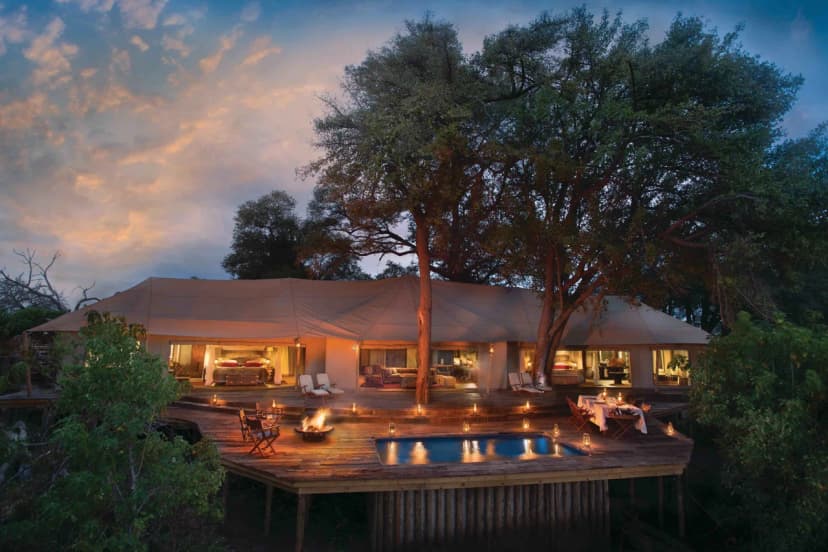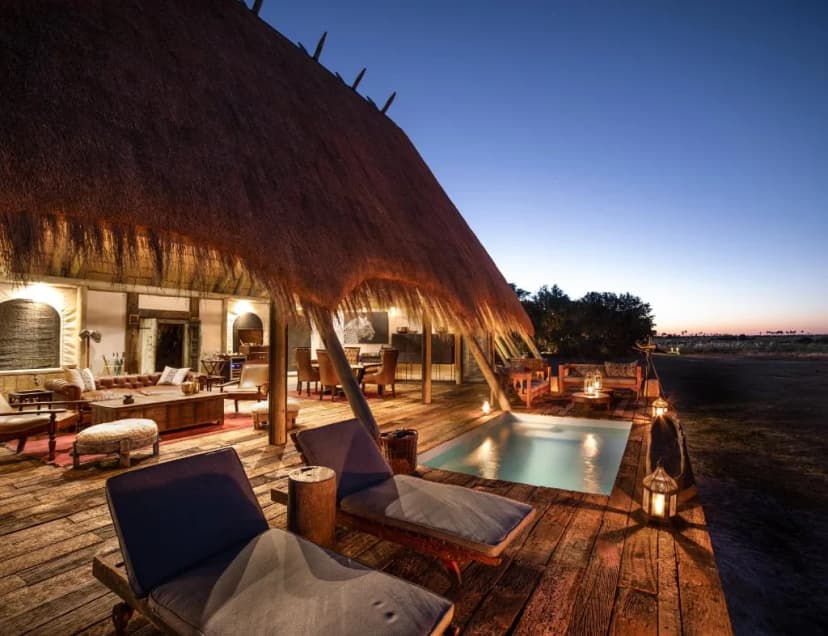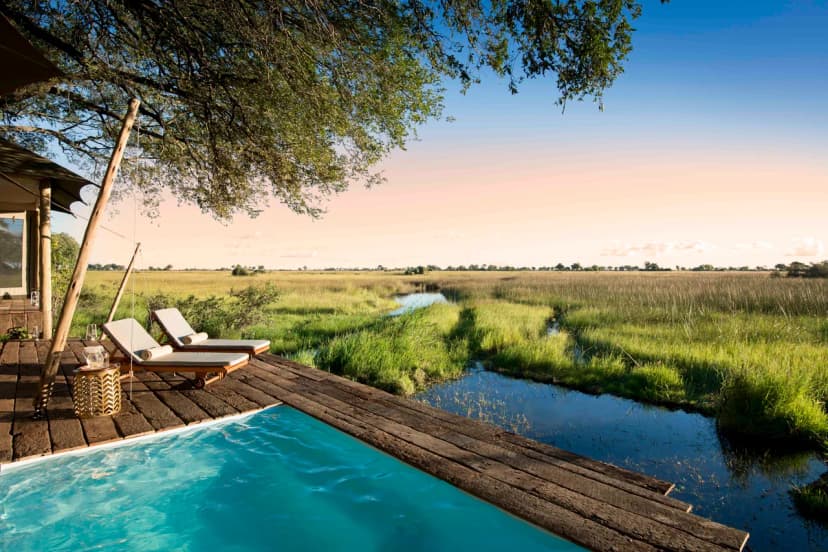
Extraordinary Botswana Luxury SuiteN°001
Botswana Safari, Botswana
Sea viewWaterfront
From $7,820 per night
 Photo by Jade Plk on Unsplash
Botswana is the benchmark for exclusive, low-impact safari: vast private reserves, few vehicles and some of the densest wildlife on the continent. In the Okavango Delta and the private Selinda Reserve in the country's far north, sole-use safari villas and private camps put elephants, lions and wild dogs on your doorstep, with your own guide, chef and vehicle and none of the crowds.
Botswana's longest-running performing arts festival brings theatre, music and dance to the capital each autumn. A cultural counterpoint if your itinerary passes through Gaborone.
Floodwaters from the Angolan highlands sweep into the Delta just as the dry season peaks, filling channels and drawing wildlife to the water. The defining natural event of northern Botswana and the best window for mokoro safaris.
San communities from across the Kalahari gather in the village of D'Kar for a celebrated festival of traditional dance and music. One of southern Africa's most authentic cultural gatherings.
Tens of thousands of zebra move onto the grasslands of the Makgadikgadi in the rains, one of Africa's longest land migrations. A compelling green-season extension to a Delta itinerary.
Summer rains turn the Kalahari emerald, antelope drop their young and migratory birds flood in. Rates are gentler and the light is a photographer's dream.
The rains taper, temperatures ease and game viewing improves by the week. A quieter, well-priced window before peak season begins.
The Okavango's annual flood peaks as the bush dries, delivering cool mornings, full channels for mokoro and boating, and superb predator viewing.
Heat builds and wildlife crowds the remaining water, producing dramatic interactions daily. October is hot, raw and, for seasoned safari-goers, the best game viewing of all.
Botswana's safari heartland lies in Ngamiland, the country's far north-west, where the Okavango River fans into an immense delta before vanishing into the Kalahari sands. The government's high-value, low-volume tourism policy divides this wilderness into vast private concessions, each with a handful of camps and strict vehicle limits, so sightings are shared with almost no one. The Selinda Reserve, a private concession of around 130,000 hectares along the Selinda Spillway between the Delta and the Linyanti, is famous for elephants, lions and one of Africa's best wild-dog populations. For villa travellers the key product is the sole-use safari house or private camp: your own suites, pool, chef, guide and vehicles, combining villa privacy with full safari operation, ideal for families and celebration groups.
Days follow the wildlife. Dawn and late-afternoon game drives track lion, leopard, cheetah and wild dog through private traversing areas where off-road driving and night drives are permitted, a freedom national parks cannot offer. On the water, glide by mokoro dugout canoe through papyrus channels or take boat safaris across lagoons alive with hippos, elephants crossing and vivid birdlife; more than 400 species have been recorded in the Delta. Guided walks read tracks and termite mounds at ground level, and catch-and-release fishing for bream and tigerfish is seasonal. Helicopter and scenic flights reveal the delta's patterning from above. Between activities, life at a private villa is unhurried: siestas by the pool, bush breakfasts and fireside dinners under the Kalahari stars.
Dining on safari in Botswana is a quiet luxury in itself. Private villas and camps travel with their own chefs, serving multi-course dinners, wood-fired breads and pastries baked in bush kitchens, and long lunches under jackalberry trees, all coordinated with the day's game drives. Menus lean international with southern African signatures: game meats, boerewors from the braai, and South African wines from serious cellars a short flight away in the Cape. Seswaa, Botswana's slow-simmered beef, and morogo greens appear for those who ask for local flavour. Sundowners are a daily ritual, gin and tonic poured as the sun drops over the floodplain, and private dining, from breakfast on a lagoon deck to a candlelit boma, is arranged around your party alone.
The dry season, May to October, is prime time. Paradoxically, this is when the Okavango floods: waters that fell as rain in the Angolan highlands months earlier arrive to fill the channels just as the surrounding bush dries, concentrating wildlife spectacularly. June to August brings cool mornings and superb game viewing; September and October are hotter but offer the year's most intense sightings around shrinking water. The green season, November to March, transforms the Kalahari with dramatic skies, newborn antelope, migratory birds and lower rates, though some water activities depend on levels. April and May are a lovely shoulder, green landscapes with drying roads. Private villas book far ahead for July to October.
International routes connect through Johannesburg or Cape Town to Maun (MUB), the dusty, characterful gateway town on the Delta's southern edge; Kasane (BBK), near the Chobe riverfront and Victoria Falls, serves the north. From Maun, light aircraft hop to private airstrips serving each concession, typically 20 to 45 minutes over the delta's channels, a scenic flight that is part of the experience. Luggage on light aircraft is limited to soft bags, usually around 20 kilograms, so pack accordingly. Victoria Falls, across the border, pairs naturally with a Botswana itinerary. The concierge coordinates every leg, from international arrivals to charter flights and road transfers between camps.