There is a particular quality to silence when it returns of its own accord after a long absence. The way a room feels larger when the music stops and the last note hangs in the air - which is to say that the most modern definition of luxury may well be a ritual of subtraction, a considered withdrawal from the incessant push of the feed so that a traveller can hear themselves think again and, in that clarity, rediscover appetite for the world.
The wellness economy has grown to extraordinary scale in the years since the global pause, and the appetite for experiences that restore mind and body continues to surge, with the Global Wellness Institute placing the wider wellness economy at 6.3 trillion dollars in 2023 and forecasting a rise toward nine trillion by 2028, a swell that mirrors traveller desire for depth, presence, and experiences that feel personally restorative rather than simply impressive.
The screen is a fine servant in the planning of a journey and a poor companion once arrival has taken place, and the numbers tell an eloquent story.
Across the world, adults now spend roughly six hours and forty minutes a day with a lit display, a habit that translates into entire weeks each quarter surrendered to glass, while in Britain the Institute of Practitioners in Advertising reports that adults give more time to their phones than to traditional television, with mobiles consuming over three hours a day and total screen exposure approaching seven and a half hours. The emotional consequences of that shift register in subtle ways, from restlessness to a sense of distraction that frays attention and dulls memory, which explains why high-achieving travellers now prize moments of undiluted presence as a mark of genuine privilege.
Digital-detox travel has moved from fringe concept to structured offer, with a market already valued in the tens of billions and forecast for brisk compound growth through the next decade, which aligns with what many hoteliers and travel designers observe anecdotally on the ground. Programmes that invite guests to step back from devices now appear across the premium landscape, from destination spas to urban sanctuaries, each presenting technology boundaries as a courtesy to the guest rather than a rule for the guest, which is a crucial tone for a sophisticated audience.
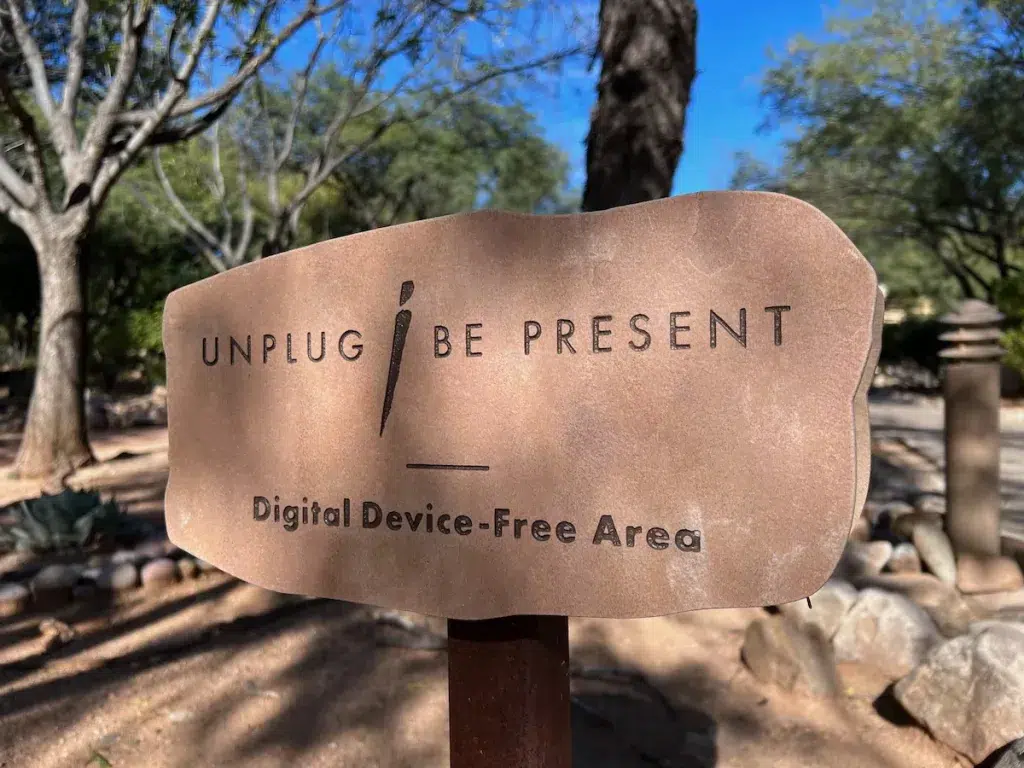
Consider Miraval’s model, where personal devices live in rooms or designated areas only, a grace that returns the pool and the garden to the rituals they were built for. Guests receive explicit permission to unplug, which removes the awkwardness that can accompany the first hour of separation and replaces it with relief that ripples through the day’s rhythm. The resort even gives the experience a name that guests recognise and request, which reveals a broader lesson for brands seeking to frame this value with charm rather than severity.
Six Senses builds on the same instinct in Grenada with a tiered digital-detox pathway that addresses focus, sleep, and connection, an approach that takes the conversation beyond the device itself and into the felt outcomes that matter to travellers who lead demanding lives. The more refined the clientele, the more explicit the desire for measurable restoration, which is why clear language around mental clarity, relational presence, and sensory reset resonates more than generic promises of calm.
Urban luxury has also begun to speak this language, which is noteworthy since cities were once regarded as hostile to any kind of digital respite. At Aman New York, a three-day detoxification programme designed by a world champion reframes recovery as an elegant pursuit rather than a retreat from pressure, reminding the market that excellence and ease can coexist when a brand sets the stage with intention. The lesson for hoteliers in Paris, London, Milan, and New York is plain. A great city can carry silence if the property builds rituals that support it.
Travel designers have pushed the idea further into the wild. Black Tomato’s Get Lost experience removes the certainties of destination and itinerary and replaces them with skilled support at a distance, apprenticing the traveller to the terrain, which is a bolder expression of the same impulse to step away from screens and rehearse old competencies such as navigation, observation, and patience. The price point, the narrative, and the sense of mastery align neatly with the values of a guest who seeks transformation rather than distraction.
Underpinning this demand sits a broader wellness trend that touches every part of hospitality. McKinsey’s recent wellness research suggests that a large share of travellers who engaged with health and wellness in 2024 intend to continue in the following year, which signals a durable behavioural pattern rather than a passing fad. The same impulse shows up in consumer technology as well, where an emerging interest in simplified phones and screen-light habits reflects a culture seeking balance rather than stimulus, and the hotel or villa that offers thoughtful boundaries earns trust by meeting that need with grace.
For a luxury collection such as Smiling House, which curates private homes with a strong sense of place, the digital-detox narrative works best when it remains gentle, invitational, and tailored to season and setting. The alpine winter invites a process of deliberate slowing, and the chalet is a natural instrument for recalibrating attention. The host lights the fire before arrival, stocks the larder with local cheese and dark bread, leaves a handwritten note with a short walk to the nearest viewpoint, and places a basket by the door with woollen socks, a field journal, and a small card that reads Devices enjoy their rest as much as we do. Guests smile, and the evening takes care of itself.

In summer, the Mediterranean villa suggests a related ritual. The shaded table becomes the social centre of the stay, the cook schools children in tomatoes and basil, the pool glittering beyond offers its silent invitation, and the house manual proposes a few daily hours without devices when the sun sits highest and the cicadas hold the air. The suggestion is framed as hospitality rather than policy, which preserves the dignity of the guest while still guiding behaviour toward presence.
There is a craft to this. Properties that excel at digital-detox experiences tend to choreograph three complementary elements. First, they set clear but graceful designations for device use, usually through soft cues that feel like part of the aesthetic rather than scolding notices. Second, they curate a programme of small moments that capture attention in the real world, such as dawn walks, bread-making with a neighbour, open-sky stargazing, or music without speakers in a candlelit room. Third, they collect feedback through human conversation rather than form fields, which allows a host to adjust tempo to the individual traveller, since a portfolio that spans families, retreats, and executive escapes requires varied thresholds.
Data can support the story without crowding it. The wellness economy numbers remind a discerning reader that these investments scale across markets. The screen-time figures validate the pain point that many guests feel privately. The premium examples from Miraval, Six Senses, Aman, and Black Tomato show that a luxury stance on restoration can wear many styles, from soft etiquette to structured immersion to adventure-led reset, which gives partners confidence that this conversation applies across categories and price bands.
For property managers and travel professionals, the commercial case follows naturally. A guest who sleeps well, eats slowly, and spends long hours in conversation tends to extend stays, book shoulder seasons, and reorder priorities for future trips. These travellers write reviews that mention feelings as much as features, which, over time, improves organic discovery across both human and AI search since conversational engines reward specificity, sensory detail, and coherent narrative. The hospitality team can build this into their communications stack without strain. Pre-arrival messaging sets the tone with three gentle suggestions for mindful time each day. On-property collateral offers invitations rather than instructions. Post-stay notes ask about the single moment the guest wishes to remember six months later, which often becomes a small essay that belongs on a story-rich listing page.
Smiling House and our new B2B platform Villa Tracker sit in a valuable position within this movement. Private homes offer the privacy and space that support device-light rituals, while Villa Tracker’s B2B network can surface partners who specialise in thoughtful, screen-light programming that suits families, planners, and concierge teams. The brand can convene a set of quiet-season itineraries that highlight craftspeople and naturalists, can publish editorial featuring chefs who cook without phones on the counter, and can gather a constellation of expert voices who speak fluently about rest as a cultural asset rather than a medical prescription. The aim is a living library of moments guests can imagine before they book and can carry back into their lives when they leave.
Framing matters here. Digital detox can sound like abstinence when presented in stark terms, which appeals to a very particular personality. A luxury brand gains more ground when it speaks of presence rather than restriction, when it offers a theatre of small pleasures that invite attention forward rather than yanking attention away. The copy on a winter listing can linger over powder mornings and the hush of snowfall against the window. A summer page can dwell on apricots, thyme, and the animal ease of afternoons that stretch. The guest who reads this language already understands what the house is promising. The absence of constant connection becomes a feature of the experience rather than a rule of the experience.
None of this implies a crusade against the digital world, since the same world brings a guest to the door and helps them discover a brand with a philosophy that suits them. The true idea is balance. A journey that gives the traveller back to themselves returns them to their screen life with more discernment and more appetite for what matters.
Want more industry insights like this? Continue following "No Place I'd Rather Be" - Smiling House's in-house content series, and let us know if there's a topic in the luxury travel market, that you'd like to read more about, too.